

C
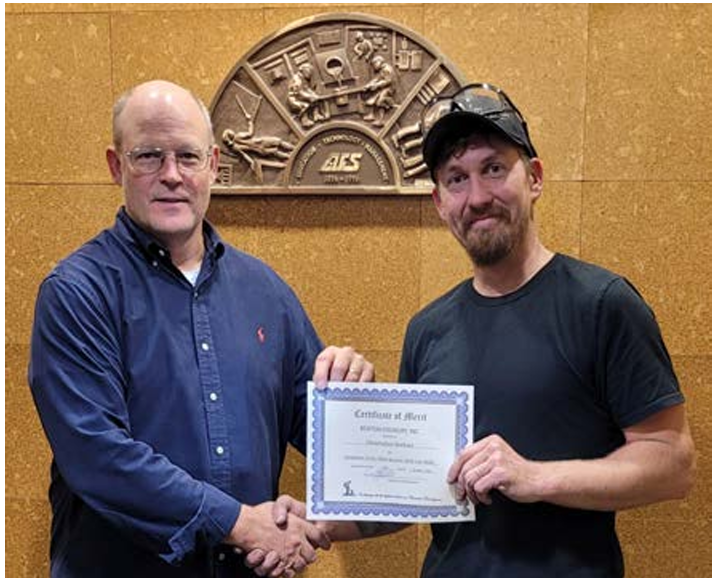
ongratulations to Chris Newhart (above), Benton Foundry’s 1st shift Employee of the Quarter. Chris works in the molding department as an automatic molder. He has worked at the foundry since 2011. Chris started out in the grinding department as a stationary grinder. He lives in Glen Lyon with his wife Cynthia who also works at Benton Foundry in the core department. Chris enjoys spending time with his family when he isn’t working.
Great Job Chris!
C
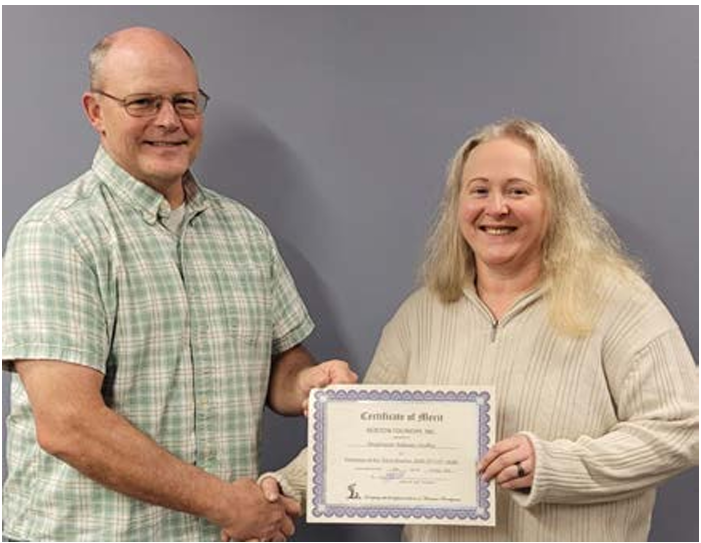
ongratulations to Stephanie Selman-Guffey (below), Benton Foundry’s 2nd shift Employee of the Quarter. Stephanie works in the maintenance department. She has worked at the foundry since July of 2025 and she really enjoys working on the foundry equipment. Stephanie lives in the Stillwater area with her wife Debra and two daughters. She enjoys farming, horses and spending time with her family when she isn’t working.
Great Job Stephanie!
B
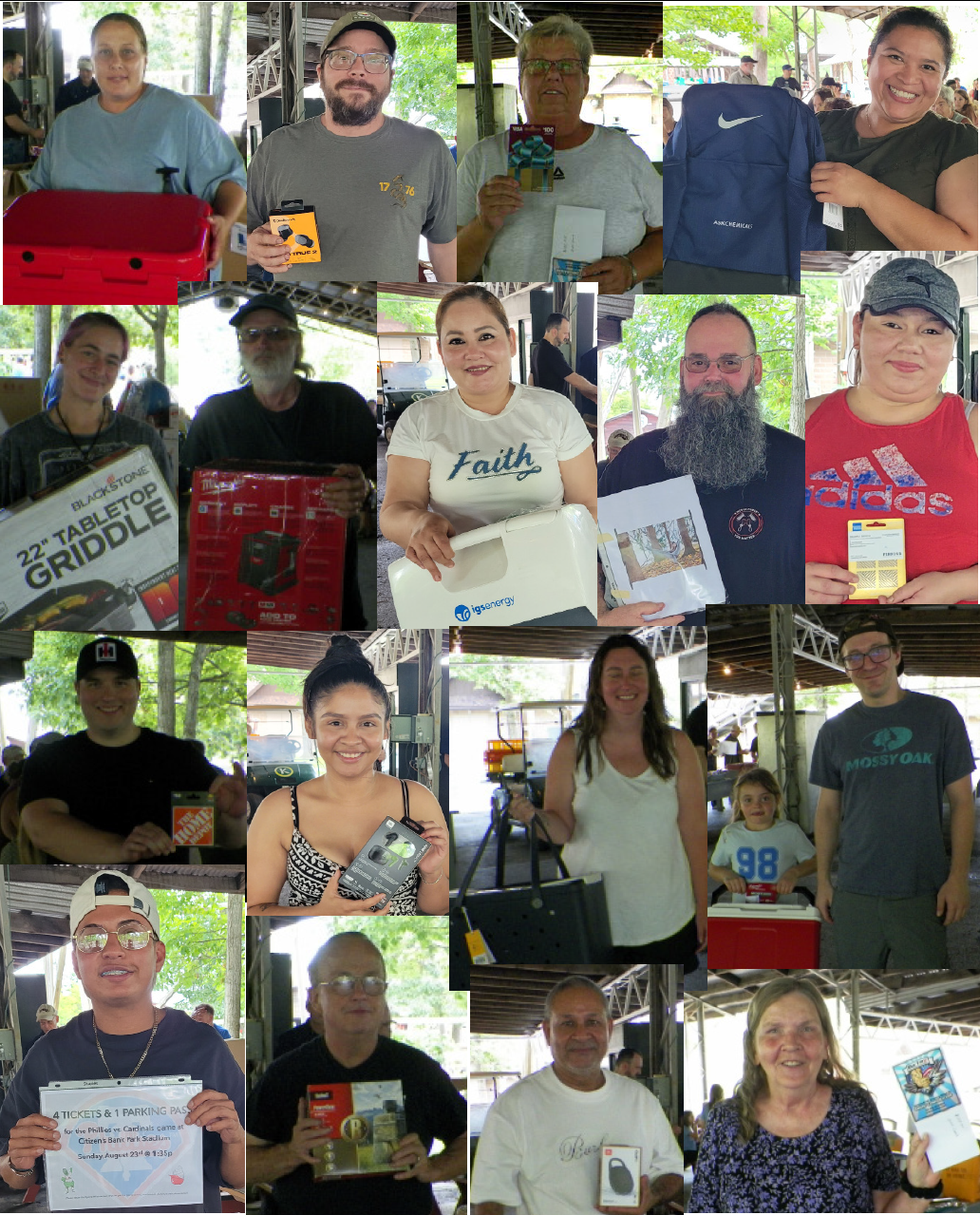
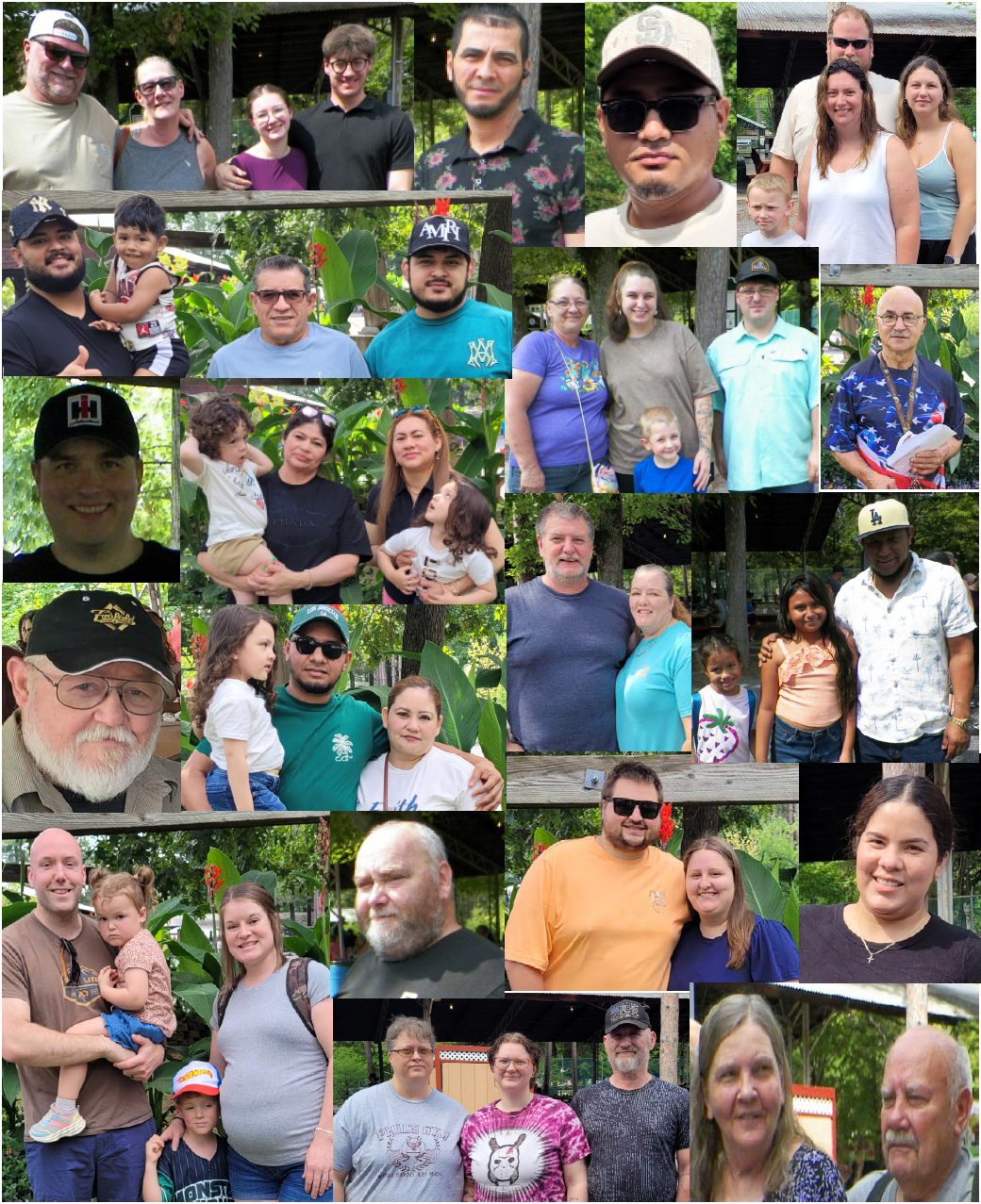
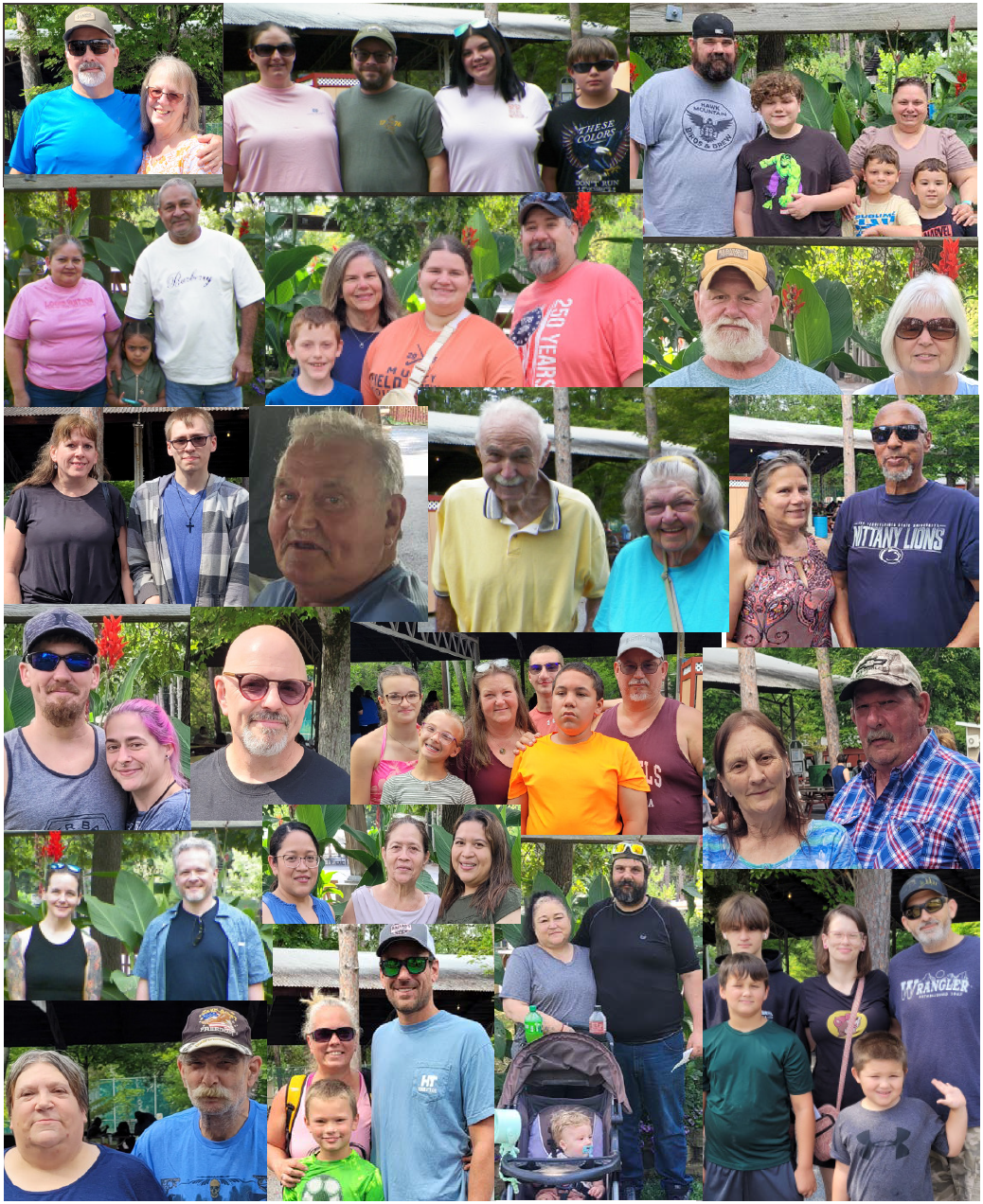
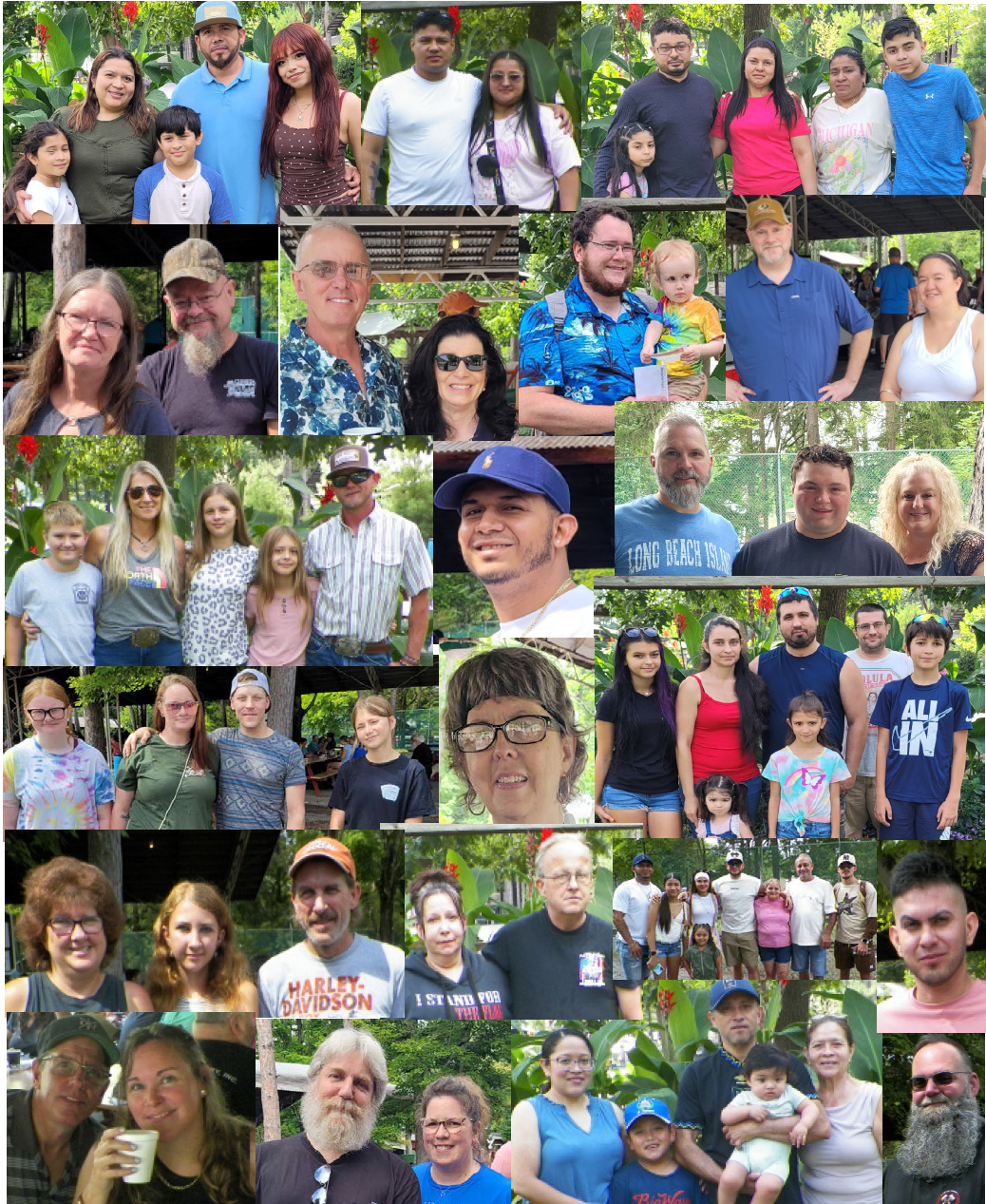
enton Foundry held its 30th annual company picnic on Saturday, August 8th at Knoebels. It was a hot summer day with lots of sun and fun. We had a nice turnout, with over 240 attending. There were lots of great prizes, many of which were donated by Benton’s vendors. We enjoyed each other’s company, good food, games and rides. A wonderful time was had by all and a huge thank you goes out to all that participated in making this event possible.

O
ur last newsletter covered our Molding Department. Phase 7 is focused on our Melt Department. A 10,000-pound charge is made up of steel scrap (rail chop, rotors, punching, axle nubs, and busheling), internal returns (gating, risers, and scrap castings), pig iron, and alloys. The specific recipe (one for ductile iron and one for gray iron) stating the exact weights of each input material are predetermined on a weekly basis, based on chemistry (controlled manganese and sulfur levels in ductile iron) and inventory levels. The gating gets run through a “gate crusher”, producing denser charge material and in turn lowering the required electricity to melt. This material is melted down in coreless induction furnaces, which use a water-cooled copper coil to apply heat magnetically. The iron in the furnace gets heated to 2,700 degrees Fahrenheit, gets a sample taken from it for chemical analysis, and slagged, removing impurities that float to the top of the bath. Once chemistry is confirmed to be within specification, the iron is tapped into a 5,000 lb. tundish ladle. The 5,000 lb. tundish ladle then distributes iron to pouring ladles, which get their own alloys based on the grade of iron and section thickness of the jobs being produced at the time of the tap. The iron pourers move their specified pouring lines, take a temperature and remove slag again from their ladles, then pour molds at 2,600 degrees Fahrenheit.
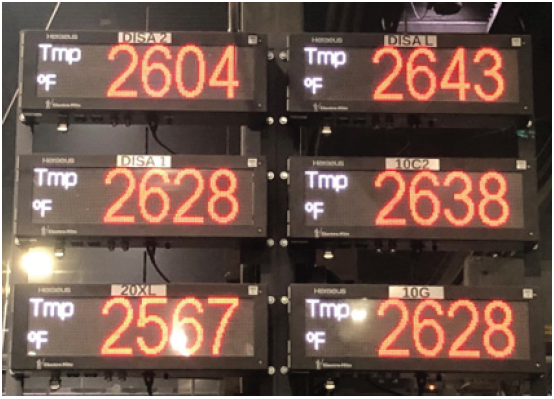
(2) 4 metric ton (approx. 9,000 lbs.)
(2) 10 metric ton (approx. 23,000 lbs.)

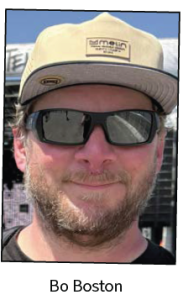 Bo Boston is the Melt Department Supervisor on Day Shift. He has been at Benton Foundry since 2001. Bo has worked in various jobs within the melt department over the years including pouring, tundish, furnace and shakeout, before he took his current position. Bo resides in the Berwick area. In his spare time he likes to play golf, watch sports and spend time with his girlfriend Ashley and her three children. Also, keeping him company are two dogs and one cat.
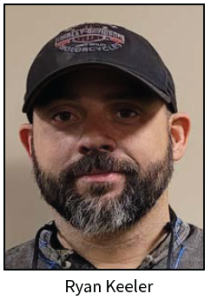 Ryan Keeler is the Melt Department Assistant Supervisor on Day Shift. He has been at Benton Foundry since 2020. Ryan began his career in the core room operating a core machine. Next he moved into the melt department doing various jobs like pouring, furnace operator etc. and then moved into his current position. Ryan resides in the Benton area with his wife, Miranda and their two children. In his spare time, he enjoys outdoor activities with his wife and kids (hunting, fishing and going for walks and hikes) and attending his kids’ sporting events.
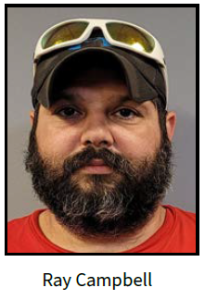 Ray Campbell is the Melt Department Supervisor on Night Shift. He has been at Benton Foundry since 2010. He began his career in the grinding room as a cleaner operator then to the melt department as a pourer, crane operator and furnace operator then moved into his current postion. Ray lives in Benton with his wife Linda. In his spare time, Ray enjoys spending time with his grandson and working in his garage.
Each shift in the Melt department employs 10-15 employees.
The next phase will cover the Grinding Department.
~ Louis Glickman
~ Winston Churchill
F
rom the moment a digital alarm rouses you in the morning until you rest your head at night, your day is seamlessly enabled by technology. Screens light up on command. Voices answer questions. Devices anticipate your needs before you speak them. We credit this frictionless existence to brilliant software, visionary developers, and sleek interface design.
 But the great illusion of the 21st century is that our world runs on code.
In reality, it runs on physical geology—highly refined, deeply excavated chunks of the earth’s crust. While the broader markets obsess over AI and the cloud, the hard truth is that every digital convenience is anchored to a massive, extractive supply chain. We have advanced technologically, but human survival remains fundamentally unchanged: we still derive much of what we do from minerals mined from the earth.
To understand how deeply we rely on the planet, we must look beneath the digital veneer at the five elemental pillars keeping modern civilization alive.
1. The Personal Connectivity Hub
We carry massive feats of engineering with us every single day—smartphones, laptops, tablets, smartwatches—treating them as if they are magic. In truth, any one of these devices is a highly sophisticated, miniature mine. Manufacturing a single smartphone requires several dozen chemical elements—an extraordinary share of the periodic table for a device that fits in your pocket, and larger devices draw on the same geological palette in even greater quantities. This marvel is built across the following core components:
- The Screen: Crafted from silica (quartz sand) and bauxite, the glass is layered with materials derived from sphalerite, gallium, and indium. Indium forms the invisible, conductive film that allows the screen to register the touch of a finger.
- The Battery: A lightweight powerhouse built from lithium, cobalt, and graphite to safely manage dense energy storage.
- The Brain (Electronics): The microprocessor that thinks for your device begins as silicon, refined from common quartz sand into near-perfect wafers. Across it runs a web of copper, silver, and gold to carry every signal. And holding it steady is tantalum— wrung from coltan ore mined largely in central Africa—which stores and smooths the flow of electricity so delicate circuits never falter.
- Speakers and Physical Body: Sound and vibration are driven by ultra-powerful permanent magnets built from rare earth elements—neodymium, dysprosium, and praseodymium. Denser still is tungsten, whose weight powers the buzz of every haptic vibration, while metals like aluminum and titanium give the body its structure.
For all its sophistication, though, this device is useless on its own. It is merely the final stop in a far larger system—one that dwarfs the hardware in your hand.
2. Infrastructure and Utilities
While portable gadgets capture our attention, the invisible infrastructure keeping society functioning day to day is far more resource intensive.
The most critical convenience in human history is the modern power grid. Electricity is entirely useless if it cannot be transported efficiently from where it is generated to where it is consumed. The entire global grid relies heavily on copper. Because of its high abundance and low resistance, copper remains the gold standard for electrical conductivity, delivering power directly from a massive generation plant into a home wall outlet with minimal energy loss.
As renewable energy continues to expand its share of electricity generation around the globe, this geological reliance changes but does not diminish. Solar panels draw on high-purity silicon and the silver printed across each cell in fine lines to collect and carry the current, while wind turbines demand immense quantities of neodymium and dysprosium—the rare earths that form the powerful permanent magnets inside the generators, turning the motion of the wind into electrical current.
That same power feeds the vast network that carries our data. When you connect at home over Wi-Fi, your router transmits through gallium arsenide chips paired with copper antennas. That signal feeds into submarine fiber-optic cables—ultra-pure silica glass cores, wrapped in steel armor and carrying a copper conductor to power the repeaters along the way.
Finally, the data reaches vast data centers: warehouses packed with silicon network switches, circuit boards plated in gold, palladium, and platinum, and thick copper and aluminum busbars distributing enormous amounts of electricity.
This heavy reliance extends to municipal water systems. Delivering safe, pressurized water and managing sanitation requires an extensive metallurgical feat. Municipal water mains require heavy-duty iron and steel, but they depend on zinc for galvanization to prevent internal rust, and copper or stainless steel for residential plumbing. It is an invisible network of metals keeping sanitation separate from survival.
3. Transportation and Mobility
 The ability to move people and goods across vast distances in hours rather than weeks defines the pace of modern commerce and lifestyle. Today, the automotive and aerospace industries are undergoing a massive technological shift, and geology is driving the entire transition.
The rise of electric vehicles (EVs) has completely rewritten the mineral playbook. Where a traditional internal combustion engine relies on steel, aluminum, and a small amount of platinum in the catalytic converter, an EV shifts the focus entirely to battery chemistry—specifically lithium, cobalt, and graphite. Lithium acts as the lightweight champion of energy storage, while cobalt is required to stabilize the cathode, preventing the battery from overheating or catching fire during rapid charging.
Global logistics and aviation rely on an entirely different suite of heavy elements. Jet engines require advanced superalloys made with nickel, cobalt, and titanium to withstand the extreme temperatures and pressures of high-altitude, long-haul flight. Without these specific metals, the turbine blades inside a jet engine would literally melt under the heat required for propulsion.
4. Healthcare and Life Expansion
The most profound impact of technology is not convenience or speed, but the extension of human life itself—and, with it, the more than 8 billion people now drawing on the earth’s resources. A century and a half ago, global life expectancy at birth was a staggering 30 years. You would have awakened to sunlight, relied on an outhouse for sanitation, hauled water from a nearby stream, and illuminated the night with expensive kerosene. Labor was purely manual or animal, and most of the day was dominated by sheer necessity.
With modern technology, global lifespan has more than doubled to roughly 73 years, with many developed nations pushing well past 80. This monumental shift separated work, home, and leisure more clearly, occurring in three distinct, technologically driven
waves—each resting on a deeper foundation of extracted materials than the last.
- Wave 1 (Late 1800s – Early 1900s): Made possible by the invisible utilities we use every day—clean running water, modern sewage systems, and food refrigeration. This was fundamentally a triumph of metal: the iron and steel mains, zinc-galvanized pipes, and copper plumbing described earlier laid the bedrock infrastructure that created the first massive spike in human lifespan by conquering child mortality.
- Wave 2 (Mid-1900s): The Medical Revolution, defined by the discovery of penicillin, the mass production of antibiotics, and widespread vaccination programs that defeated infectious diseases like tuberculosis and pneumonia. These breakthroughs depended not only on chemistry but on an industrial base of stainless-steel manufacturing and a refrigerated “cold chain”—the copper, aluminum, and specialized coolants that kept vaccines viable from factory to clinic.
- Wave 3 (Late 1900s – Present): Modern Management, utilizing high-tech cardiovascular medicine, stroke interventions, and advanced cancer therapies to turn once-fatal acute conditions into manageable, chronic ones.
This modern wave is bound strictly to specialized mineral resources. Consider an MRI machine: to generate the massive magnetic fields required to align hydrogen atoms in human tissue without a single incision, it relies on superconducting magnets made of a niobium-titanium alloy, kept functional by liquid helium cooling. On a smaller scale, lifesavers like pacemakers use titanium for their outer casings—entirely biocompatible, resisting rejection and corrosion inside the body—powered by dense lithium-iodine batteries built to last a decade.
But the deeper story is one of sheer multiplication. A century and a half ago, roughly 1.3 billion people each lived about thirty years, most of it in material simplicity. Today, more than 8 billion people live past seventy—and each of those longer lives is vastly more resource-intensive than the one it replaced. Every additional decade of life is a decade of hospital visits, imaging scans, implanted devices, refrigerated medicines, and the vast metal-and-silicon apparatus of modern care. We have not simply added more people to the planet; we have added more people, living far longer, each drawing on a deeper well of the earth’s minerals than any generation before them. The extension of human life and the growing number of people on earth are, in the end, among the most resource hungry achievements in our history.
~By Jim Puplava, CFP®, CTS™, CES™, President and CEO
~ Financial Sense Wealth Management
This article wll be continued in the 4th Quarter of 2026 newsletter.
O
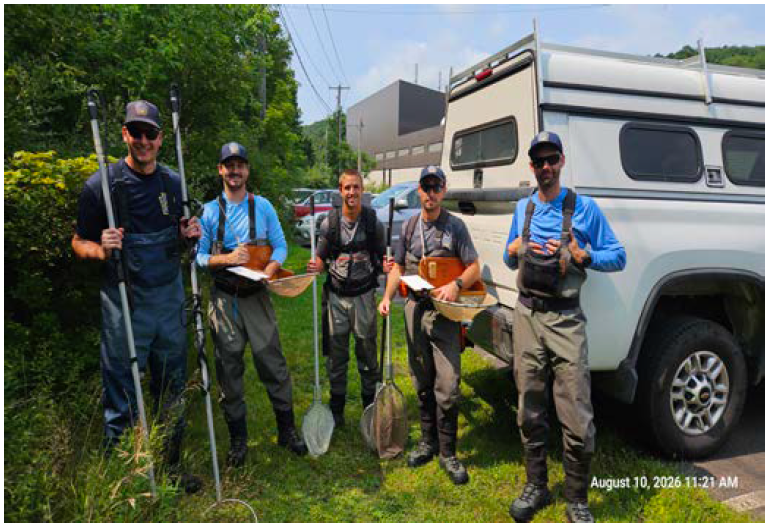
n August 10, 2026, the PA Fish Commission did a survey of Coles Creek across the street from Benton Foundry. The stream empties into Fishing Creek which is considered a great trout stream. Coles Creek by the foundry is considered a high-quality native trout stream. There were five young men who did the survey of over 375 meters.The five came out of the Bellefonte office and travel the state to these stream reviews in the warmer months.
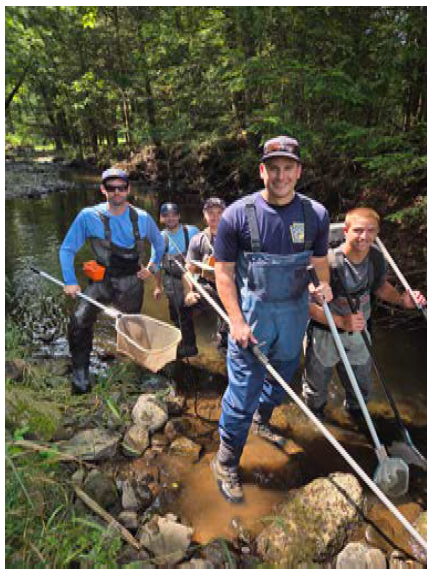
There are 18,000 miles of trout stream and approximately 1,000 locations that are considered Class A, which is the highest rating. To be considered Class A, you have to surpass 6 weight measurements per hectare. For Class A you need to be above 40 Kilograms per hectare. Benton Foundry’s stream was at 78 Kilograms per hectare which puts Benton in an elite class. Almost 2x the Class A qualifications.
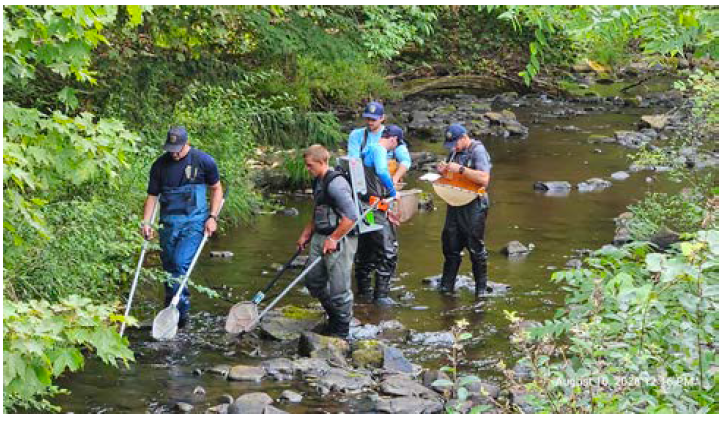
The review showed them collecting 210 fish of which 75 were legal size of 7.” The largest fish was 16.” Most of them were brown trout but there were also several other species collected. There were nine brook trout among those species collected. They measured the fish in order to judge reproduction in the stream. There were 76 at 2” and 22 at 3” which would be considered this year’s hatch. The mechanism for collecting is one person has a backpack with a battery in it and a round anode. Another person has another anode, and a shock goes into the water to slightly and temporarily incapacitate the fish. This process does no harm to the fish which are then classified, measured and tagged. The Department’s analysis shows they get about 60% of available fish in the stream this way.
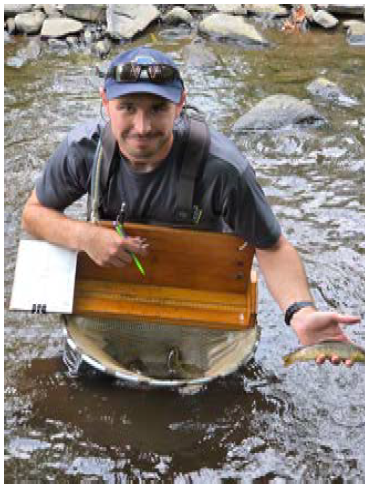 The key to trout stream health is shade and springs, as the trout like both, being cold water fish. The old spring house across the street from the foundry provides cool, clear spring water at 13°C or upper 50°F. The stream the day of the test was upper 60°F. Not bad for mid-August. The group continued down the road from Benton Foundry about a mile and got a reading of 20 kilograms per hectare as the stream was more spread out and hence shallower.
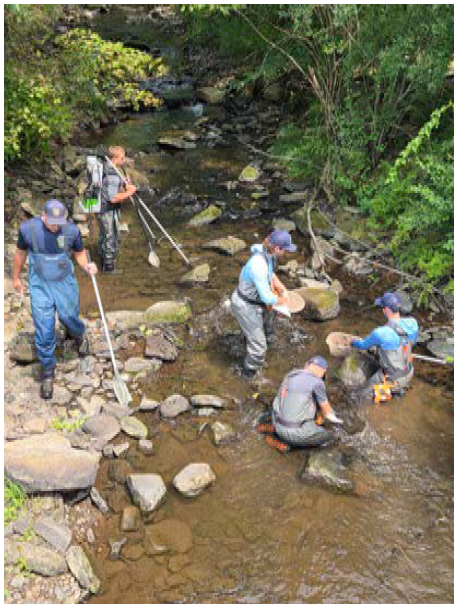 This project was done previously over 30 years ago. You will see some pictures Brock Smith took as he and Tim Brown followed the collecting group from the Fish Commission. This was truly an example of your tax money being used for great work.
Benton Foundry is proud of the fact it uses no discharge process water in the production of castings.
N
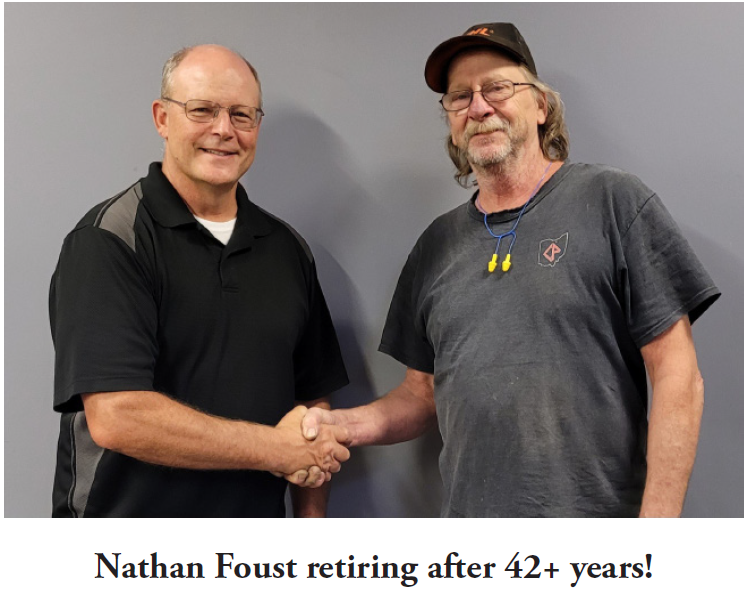
athan Foust began his career at Benton Foundry in 1984. He started out in the grinding room, then on the charging crew and spent most of his 42 years in the pattern shop. Nate’s skill, talent and the quality of his work were top notch and will be greatly missed, along with his very dry sense of humor. His quiet disposition also served him well. Nate lives in the Muncy Valley area with his significant other, Kathy. Upon retirement, Nate plans on hanging out – drinking a few beers, relaxing and working in the garage with his trusty sidekick, his chocolate lab, Forrest.
Nathan, we wish you a long, healthy and happy retirement!

O
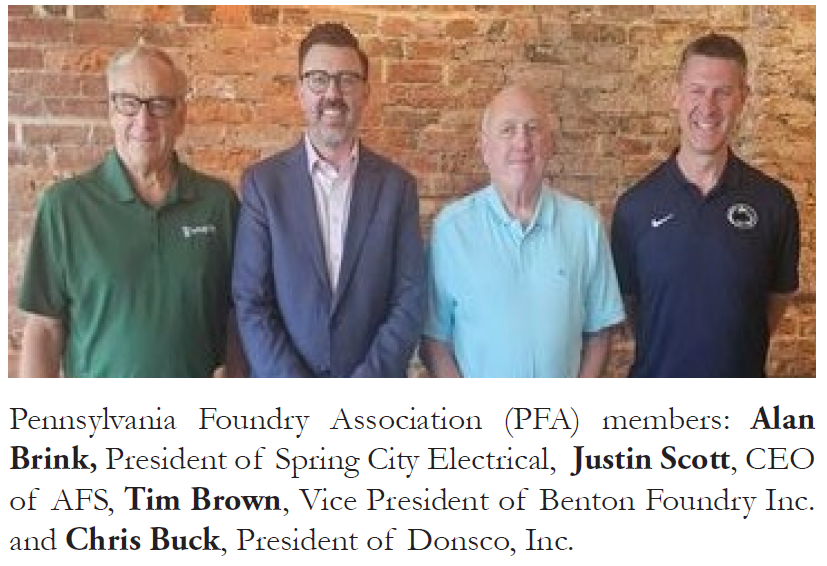
n September 10, 2026, members from the Pennsylvania Foundry Association (PFA) came for a visit to Benton Foundry. There were 35 attendees that came from all over Pennsylvania. They enjoyed the tour of the foundry while it was in full swing. Even if you are familiar with a foundry, it is still very impressive to see hot iron being poured out of the furnaces.

B
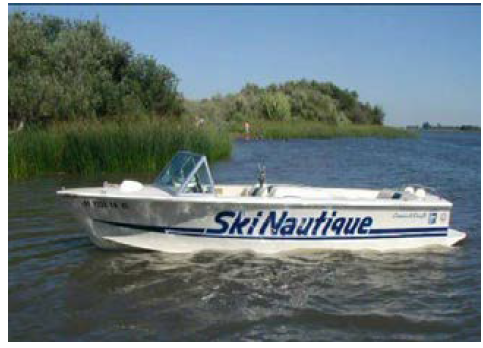
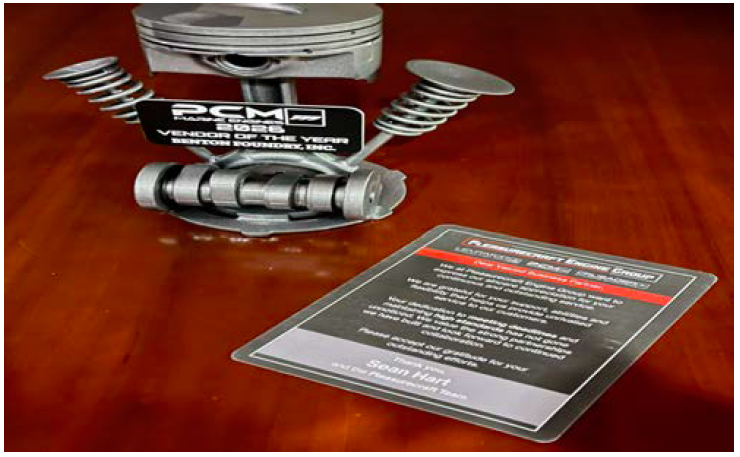
enton Foundry was chosen by our customer, Pleasurecraft Engine Group as Supplier of the year for 2026. According to their website, Pleasurecraft Engine Group has provided the ultimate in premium power for the world’s finest inboard watersports boats, motor yachts, and sportfishing vessels for over 50 years. They are located in Little Mountain, South Carolina.
C
arl Puderbaugh worked at Benton Foundry for 40 years as an electrician. He retired in 2013 after passing the “torch” to Ed Whitmoyer. Carl was a kind man who was always willing to lend a hand and he was top notch at his job.
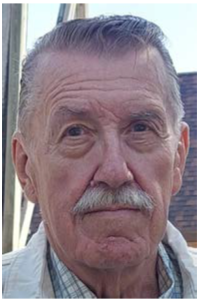 Carl lived in rural Benton and he and his late wife Joyce raised two sons (who both worked at Benton Foundry at one time) and one daughter. He also has three granddaughters and one great grandson.
Carl was instrumental in the Benton Foundry transition from 1,500KW 440 volt to the current 69,000KW system, the foundry-owned substation. Carl was part of the design team.
We will miss seeing Carl at the company picnic which he never missed. Rest Easy Carl.

How many apples does it take to make just one gallon of fresh apple cider?
Answer will be in 4th Quarter 2026.
How many bones do sharks have?
Zero
| Ben Gonzalez | Highest Foxall Uptime |
| Jacqueline Artero | Highest Grinding Efficiency |
| Chris Newhart | Highest Molding Efficiency |
| Ed Evans & Chris Newhart | Lowest Molding Scrap Rate |
| Nico Combarro | Highest Core Production Efficiency |
| Glenda Chavez | Highest Core Assembly Efficiency |
Angela Rodriguez
Yesslan Ruiz
Stanley Shuleski
Gene Burkhart
Aaron McHenry
Thomas Bierly
Lester Urbina
Edwin Ramirez
Shaun Beckham
Mike McDonald
Stephanie Selman-Guffey
Ed Gill
Terry Whitmire
Pete Gowin
Gene Eckroth
Michael Silvetti Jr.
Billy Green
Dave Buma
Ben Hatch
Maria Higgins
Greg Woodside
Joseph Barrese
Mason Smith
Steve Brown
Gustavo Taveras
Esperanza Rodriguez
Devan Spinelli
Jeff Garrison
Jose Jesus Martinez
Thomas Zelinka
Wendy Rosenberger
Gabe Keller
Lesbia Vargas
Norlan Valdivia
Dave Hetler
Wilberth Lopez
Chris Slusser
Tim Miller
Cassandra Shoemaker
Jacqueline Artero
Teo Grigas
Jose Palacios Rivera

D
ata centers are facilities that house computer systems, including servers, to store and manage data. Demand for data centers is rising, especially to support new AI technologies that are computationally intense. Data centers require large amounts of energy and mineral resources to build, including critical minerals. The U.S. relies on imports from other countries for many of these minerals.
Thank you to Annette Brown for all of her hard work in organizing the company picnic.
Good Job to Caden Temple and Maranda Messersmith for being in the Top 5 AFS (e-learning) students in the month of July.
Congratulation to Timmy Schechterly on his recent wedding.
Good Job to Caden Temple and Amber Thomas for being in the Top 5 AFS (e-learning) students in the month of August.
Congratulations to Olin Covington on the birth of his daughter.
Thank you to Annette Brown for organizing the foundrywide PHS appointments and getting over 200 people on time to their various appointments.
Good Job to Chris Newhart for running a remarkably low scrap rate on the Large Disa.
Thank You to Jose Lopez for helping in numerous areas throughout the melt department.
Great Job to Francisco Rocha for helping in numerous areas throughout the Core department.
Awesome Job to Teo Grigas and Andy Spencer for helping in several different roles and doing an excellent job wherever needed.
Good Job to several production employees and supervisors that routinely help with maintenance.
Great Job to Caleb Temple and Gabe Keller for taking the initiative to finish the Gaylord.
Congratulations to Olivia Schechterly on the birth of her daughter.
Thanks to 2nd shift melt department and Cassandra Shoemaker on their efforts of keeping the facility clean.
Awesome Job to Nelson Lemus and Colston Gowin for the extra effort you put forth on a daily basis.
Congratlations to Chris Diltz and Cohan Nafus for receiving the Benton Foundry Scholarship for academic year 2026-2027 at Pennsylvania College of Technology


“Management is doing things right, leadership is doing the right things.”
“Efficiency is doing the thing right. Effectiveness is doing the right thing.”
“There is nothing quite so useless, as doing with great efficiency, something that should not be done at all.”
“The purpose of business is to create and keep a customer.”
~Peter Ferdinand Drucker was an Austrian American management consultant, educator, and author, whose writings contributed to the philosophical and practical foundations of modern management theory. He was also a leader in the development of management education, and contributed to the popularization of the concepts known as management by objectives and self-control, and he has been described as “the champion of management as a serious discipline.”