

O
ur last newsletter covered our Core Department. Phase 6 is focused on our Molding Department. Molds are made from compressed green sand (silica sand, water and bentonite “clay”). The top of the mold is called the COPE and the bottom of the mold is called the DRAG. Each pattern has an impression. A flask holds the sand in the cope and drag. Cores make voids inside the castings (as described in last quarter’s newsletter). Core weight ranges from less than a pound to 80 plus pounds. The cope and drag are filled with sand then hydraulicly squeezed. The pattern is then separated from the cope and the drag. Molds are blown out with compressed air and the core is inserted. The cope and drag are put back together and sent out of the machine to the mold handling line where they are to be poured. Machines automatically apply pattern spray to the pattern so sand does not stick to impressions. Filters are placed in the molds to “filter” out any loose sand and slag.
 We currently have 6 automatic molding machines:
- (2) 14×19 Hunter molding machines. (10g/10c2)
- (2) 20×24 Disa match 130 molding machines. (Disa 1/Disa 2)
- (1) 20×24 Hunter molding machine. (20×1)
- (1) 28×32 Disa molding machine. (Large Disa)
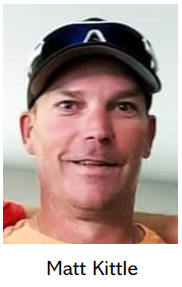 Matt Kittle is the day shift Molding Supervisor. He has been at Benton Foundry since 1994. He is a second generation foundryman. His father Marvin Kittle retired in 2007. Matt has worked in the molding department for most of his career. Matt was an All-state soccer goalie in high school. He also was quite a baseball player and had a chance to play Division I baseball. He reached speeds of up to 90 mph as a pitcher. Matt and his wife, Christie reside in the Muncy area. They have three children and four grandchildren. He enjoys hunting with his boys and grandson and working out in his spare time.
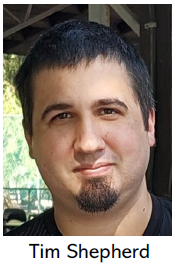 Tim Shepherd is the night shift Molding Supervisor. He has been employed for 14+ years. He started out as a part-time summer employee in 2011. Tim, his wife Tanya and their four children live in the Benton area. Tim enjoys hunting and spending time with his family when he isn’t working.
Molders include: Tom Foust, Gilberth Aleman, Chris Newhart, Jeff Jones, Yesslan Ruiz, Gabriel Lopez, Sabina Lopez, Ed Evans, Pete Gowin, Dave Straub Sr., Jordan Winn and Cassandra Shoemaker.
The next phase will cover the Melt Department.

O
n July 4, 2026, the United States will mark its 250th anniversary. It’s a rare moment in the life of a nation, one that invites all Americans to pause and reflect. Reaching 250 years is a significant event for any nation. This anniversary isn’t just about dates and documents. It’s about people, places, and stories—millions of them. It’s about how a group of colonies came together in 1776 to declare independence and how that moment set the course for the country we live in now. It offers a chance to learn more about how the United States began, how it grew, and how it has changed over time. Every era of American history has shaped the present in some way, from early settlements to westward expansion, from war and invention to civic achievements and cultural growth. The United States has changed a great deal over two and a half centuries. One of the lessons of history is that every generation helps shape what comes next. America’s 250th is not just a moment to look backward—it’s also a time to think forward.
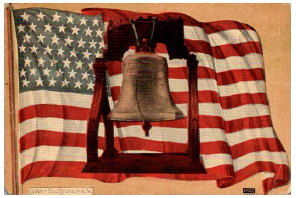 Founding Fathers in Metal Casting
As you celebrate July 4th and the 250th Anniversary of the USA, remember the contributions made by members of our industry!
Of the 56 signers of the Declaration of Independence in Philadelphia 250 years ago, six of them owned or operated metal casting facilities. They were the tech executives of the 1770s.
Of the six metal casters, four were from Pennsylvania. These Founding Fathers were instrumental to the iron and metal casting industry in the American colonies, owning and operating prominent furnaces and forges:
- George Ross: Owned the Mary Ann Furnace in West Manheim Township, Pennsylvania
- James Smith: Operated the Codorus Creek Forge in York County, Pennsylvania
- George Taylor: Leased and managed the Durham Furnace in Bucks County, Pennsylvania
- James Wilson: Significant interests in the Hopewell Furnace in Union Township, Pennsylvania
- Charles Carroll of Carrolton: Owned extensive ironworks in Carrollton, Maryland
- Stephen Hopkins: Invested in the Hope Furnace along the Pawtuxet River in Rhode Island
These signers defied the British Iron Act of 1750, which prohibited the manufacturing of finished metal products in the colonies.
~ Forwarded from Alan Brink, Spring City Electrical

I
t seems as though you can’t drive more than a few minutes in South Central Pennsylvania without coming upon a snack food manufacturer. In fact, Hanover, Pennsylvania is known as the “Snack Food Capital of the World,” and its claim to the title is supported by the region’s dominance in potato chip, pretzel, and chocolate companies. Utz potato chips, Snyder of Hanover pretzels, or the ever-so-sweet Hershey’s chocolates all call the area home. With so many major snack food distributors, what made the Keystone state such a key player in America’s snack food industry?
Snack Foods With Pennsylvania Dutch Roots
Pennsylvania’s ability to dominate in the snack food industry is strongly attributed to the Pennsylvania Dutch community, the region’s agricultural, industrious culture, and close proximity to large urban markets like New York, Philadelphia and Washington D.C.
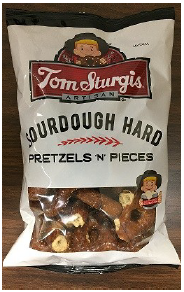 When the Pennsylvania Dutch community began immigrating to America to escape religious persecution in the 17th and 18th centuries, they soon gained the reputation of being hard-working and business minded. With them came many German traditions and recipes, including the “hard pretzel,” according to National Public Radio. The commercial production of pretzels is attributed to the Stugis family in Lancaster County, where Julius Sturgis opened the first commercial pretzel bakery in Lititz. Since then, the Sturgis family has been joined by companies such as Bachman (now owned by Utz), Unique pretzels and many more.
Farmland Drives Potato Chip Manufacturing
While there is some debate as to where the potato chip originated, credit is often given to George Crum, an African American chef from Saratoga, New York, who is said to have created the salty snack in 1853. By the time the potato chip’s popularity spread across the Eastern Seaboard, Pennsylvania’s farmland was already prime for potato chip manufacturing.
Slightly acidic soils and mild seasons made the region perfect for growing potatoes with a lower moisture content, ideal for frying into the popular snack we know today. Another ingredient in abundance in the region that greatly helped the development of Pennsylvania’s snack-food industry was lard, or pig fat. A common ingredient in Pennsylvania Dutch cooking, lard-fried potato chips have a harder texture and are said to have stronger flavor than those fried in vegetable oils.
As potato chips rose in popularity and spread through Pennsylvania Dutch counties, the unique qualities of lard-fried chips became an attraction for many potato chip lovers, according to Dirk Burhan, author of “Crunch: The History of the Great American Potato Chip.”
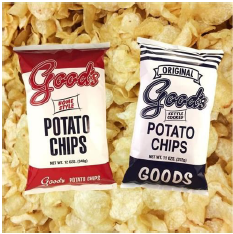 By the early 20th century, the regional accessibility to potato producers and major consumer markets had laid the perfect foundation for the development of Pennsylvania’s potato chip manufacturing empire.
Good’s Potato Chips was the first potato chip producer founded in Pennsylvania. Started 1886 in Adamstown, the company continues to produce their original potato chips and has expanded their product line to include cheese curls, pretzels and party mix. In 1921, two popular snack food brands were established as small-town potato chip producers.
 Wise Potato Chips was created by Earl Wise in Berwick, Pennsylvania, when the young grocer needed a solution to an overstock of potatoes. Farther south, William and Sallie Utz began making batches of potato chips in their summer kitchen at their home in Hanover, Pennsylvania. Since its inception in 1921, Utz has broken into the national snack food market along with Herr’s potato chips, which was established by Lancaster native James Herr in 1946. To this day, both Herr’s and Utz continue to expand their product lines and dominate many Pennsylvania grocery store shelves.
Today, Pennsylvania has over 20 potato chip manufacturers and 16 of those are independently owned. Brands such as Martin’s, Middleswarth, Good’s, Gibble’s, Zerbe’s and many others are enjoyed by so many Pennsylvanians that nationally loved brands like Frito-Lay hold only a small fraction of shelf space on many grocery shelves in the region.
Chocolate Moves Into Hershey and Lancaster
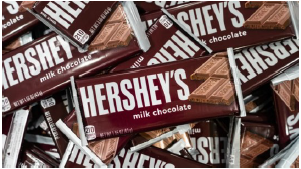 Nothing pairs better with salt than sugar. Along with the potato chip and pretzel companies located in Pennsylvania, there are many confectionery and chocolate companies that got their start right here in the Keystone State.
Hershey’s Chocolate, started in 1900 by Milton Hershey, is one of the largest chocolate brands in America selling approximately 373 million milk chocolate bars per year. It continues to acquire brands in both the savory and sweet snack food categories, including brands such as Dot’s Pretzels, Lily’s Sweets and Sour Strips.
 Wilbur Chocolate, which claims the first chocolate drop, also originates from Pennsylvania. Starting in Philadelphia, the chocolate company that would later become an iconic landmark of Lititz, was acquired by worldwide food group Cargill in 1992.
Today, Pennsylvania continues to have a strong snack food culture that takes pride in the locally-grown businesses that have shaped the American snack-food industry.
From debating which local potato chip brand is your favorite, to taking a tour at one of the many snack-food factories, there’s no end to what you can learn and enjoy about Pennsylvania’s favorite snacks.
~ Riley Hurst Brubaker, Correspondent
~ Lancaster Farming – Oct 5, 2025
O
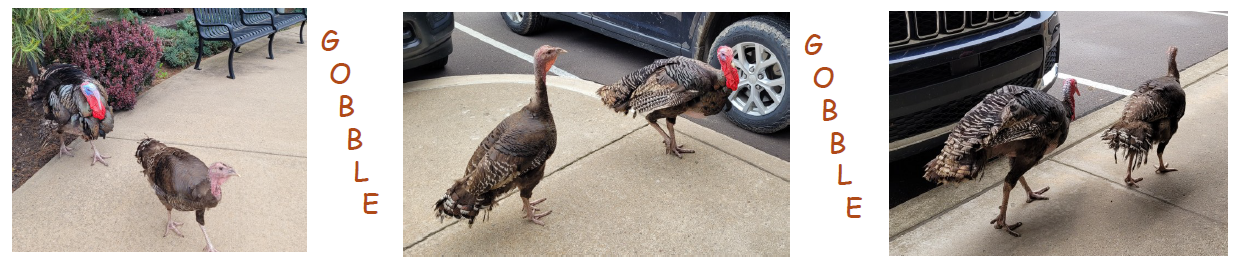
n a beautiful spring day at the end of May, it was a good day for a lunchtime walk. Marty Pelas, one of our employees from the IT department crossed Route 487 and took a walk up the hill to get some exercise. When he returned, he was not alone. One of the resident’s up the hill has 2 tame turkeys (one male and one female) who were out of their pen. They decided Marty might have food so they followed him down the hill, across the road and back to the building. This is obviously not something we see everyday, so several of the employees went out to check out the situation. They (the turkeys) approached everyone, but sadly, no one had any food for them. After they visited for a while and we took enough pictures, Sherry Steele, from the front office decided to try to return them home. After looking both ways, (Sherry, not the turkeys) they followed her across the road and back up the hill. Surprisingly, they did not try to follow her back down.
We never know what we may see out here in the middle of the woods; it made for a fun distraction to the day!
R
ips are strong currents running out to sea, which can quickly drag people and debris away from the shallows of the shoreline and out to deeper water. They tend to flow at 1–2mph but can reach 4–5mph, which is faster than an Olympic swimmer. Rips are especially powerful in larger surf, but never underestimate the power of any water. They are also found around river mouths, estuaries and man-made structures. How to spot and avoid a rip current. Rip currents can be difficult to spot, but are sometimes identified by a channel of churning, choppy water on the sea’s surface. Even the most experienced beachgoers can be caught out by rips, so don’t be afraid to ask lifeguards for advice. They will show you how you can identify and avoid rips. The best way to avoid rips is to choose a lifeguarded beach and always swim between the red-and-yellow flags, which have been marked based on where is safer to swim in the current conditions. 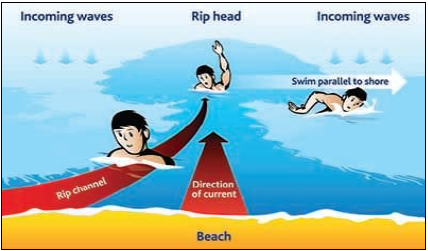 This also helps you to be spotted more easily, should something go wrong. If you see anyone else in trouble, alert the lifeguards or call 999 or 112 and ask for the coastguard.
If you do find yourself caught in a rip:
- Don’t try to swim against it or you’ll get exhausted.
- If you can stand, wade don’t swim.
- If you can, swim parallel to the shore until free of the rip and then head for shore.
- Always raise your hand and shout for help.
~ RNLI Lifeboats
Benton Foundry has many long-standing employees. See below:
40 + years
- Tim Brown
- Tom Foust
- Nathan Foust
35 – 39 years
- Jeff Hall
- Dave Eveland
- Albert Phillips
- Annette Brown
- Rob Bowman
- Scott Vandine
- Lynn Sheatler
30 – 34 years
- Sherry Steele
- Eugene Eckroth
- Teo Grigas
- Matt Kittle
- Mike Schumacher
- Kenny O’Brecht
- Ed Evans
- John Andrews

25 – 29 years
- Jason Karcher
- Shawn Frey
- David Travelpiece
- Steve Lappan
- Greg Vandine
- Cheri Brown
- Robert Houser
- John Hospodar
- Terry Whitmire
- Peter Gowin
- Aaron McHenry
- Bo Boston
- Della Norton
20 – 24 years
- Tim Miller
- Lynn Miller
- Joe Timko
- Adolfo Barrientos
- Eric Piatt
- Myriam Mayorga
- Boyd Lore

15 – 19 years
- Colin Jandrasitz
- Mike McDonald
- Ray Campbell
- Ed Posluszny
- Brock Smith
- Frank Packer
- Eugene Ryman
- David Straub
- Chris Newhart
- Paul Simko
- Ben Gonzalez
- David Emmett
10 – 14 years
- Jeff Jones
- Amanda Hartman
- Marty Pelas
- Greg Woodside
- Tom Vandine
- Tim Shepherd
- Kevin Trychta
- Mike Shultz
- Matt Shultz
- Mike Modla
- Chad Davis
- Eugene Burkhart
- Chris Madl
- Billy Green
- Eric Malcein
- John Harvey
- Dale Engle
- Theresa Kubasek

W
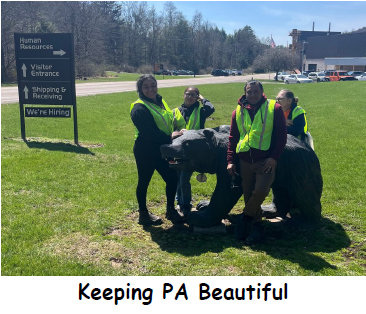
e just completed our Spring 2026 highway cleanup event for the PA Adopt-A-Highway program. We routinely cover the area of Route 487 from Route 118 to the DOT shed and we coordinate with the local PennDOT office in Bloomsburg. This is a four-mile stretch of 487. While the typical stretch covered by this program is limited to a two-mile stretch, we tend to boil over to those two obvious boundaries as there are no others in the area that would service the overflow. 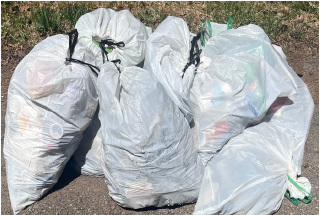 In this event, we collected 15 bags which is a record low indicating better behavior in the area than in times past. Let’s hope the trend continues. We finished up the day with the same crew cleaning up the front of the building and policing the foundry grounds for litter.
Benton Foundry would like to thank the following employees for helping with the spring litter pick-up . . . Albert Phillips, Elizabeth Strauch, Martha Pineda Arauz, Teresa Rodriguez and Francisco Mendoza.
U
nmanaged hearing loss may have serious health consequences. Know what to look for and what to do.
 Approximately 15% of adults in the U.S. report some trouble hearing. The older we get, the more likely it is we will experience some degree of hearing loss. Nearly 25% of Americans ages 65 to 74 have hearing loss that is considered disabling. This increases to 50% for those 75 and older.
“The ability to hear allows us to connect to the world around us,” says Alison Packer, AuD, clinical audiology manager at Tufts Medical Center. “Hearing helps us engage in conversations both professionally and personally. It also plays an essential role for safety, allowing us to detect things like warning signals, alarms, and approaching vehicles.” Emerging research suggests it may also be important to overall health.
Hearing and Health. In addition to reducing quality of life, hearing loss has been associated with higher risk for several adverse health outcomes. While cause-and-effect has not been definitively proven, evidence is mounting. Let’s take a look at some reviews of research:
➧ Depression: An analysis of 35 studies published in 2020 found that hearing loss was associated with greater odds of depression in older adults.
➧ Dementia: The 2020 Lancet Commission report on dementia prevention, intervention, and care confirmed hearing loss as the leading modifiable risk factor for dementia. A 2021 review of research on the association between hearing loss and cognitive decline suggested several theories that might explain this association: sensory deprivation may cause permanent changes to brain structure and function; the increased brain power needed to compensate for the reduced sensory input draws resources away from other processing; or the hearing problems and cognitive changes may have the same underlying cause. The social isolation, depression, and decreased physical activity often associated with hearing loss may also increase risk for dementia.
➧ Death: A 2022 analysis combining information from 26 observational studies that included over a million participants concluded that hearing loss was associated with higher risk of death. (This does not mean hearing loss is deadly. Some conditions and events that contribute to hearing loss, like high blood pressure, type 2 diabetes, stroke, and dementia, also increase risk of death.)
Hearing Help. Luckily, hearing loss is often easily corrected—if we’re willing to accept help. A recent study found that using hearing aids regularly was associated with lower risk of death in U.S. adults with hearing loss compared to never using them. A randomized controlled trial involving nearly 1,000 participants ages 70 to 84 found that hearing aids did not slow cognitive decline over three years compared to general health education in the group as a whole, but hearing aids did make a difference for those at higher risk for cognitive decline. Since hearing loss is related to other health conditions, being aware of any hearing loss may help focus you and your healthcare providers on diagnosing and treating other problems.
What to Do. “If you find you are having difficulty following along with conversations, especially in the presence of noise, make an appointment to have your hearing tested,” says Packer. “Frequently asking people to repeat what they’ve said, having to turn up the volume on the TV or radio, hearing a persistent ringing or buzzing sound in your ears (tinnitus), and withdrawing from social situations because it’s hard to follow what’s going on are other signs a hearing assessment is necessary. Even if you are not experiencing problems, a baseline hearing test is a good idea. I recommend everyone get one starting around age 55.”
Identifying and correcting any hearing loss may support better mental, physical, and cognitive health. Try these tips:
- Get a Baseline. A baseline hearing test can help your doctor or audiologist detect any hearing loss in the future.
- Get Tested. If you or those close to you suspect you may be having problems hearing, do not hesitate to get tested.
- Explore Options. Hearing aid technology has come a long way! Explore your options with an expert before deciding they are not for you.
 Unfortunately, most people who could benefit from hearing aids don’t get them. According to the National Institutes of Health, only 16% of adults ages 20 to 69 and 30% of those 70 and older with hearing loss have ever used a hearing aid. “Hearing aid reluctance is very common,” says Packer. “Hearing aid technology has come so far! From Bluetooth connectivity and rechargeable batteries to smaller size and enhanced cosmetic appeal, hearing aids are certainly worth a try. Don’t become overwhelmed by the options. An audiologist can walk you through your specific hearing loss and help you find the level of technology and style of device right for you. Most of our patients immediately notice an improvement and wish they had started wearing hearing aids sooner!”
~ Tufts University Health and Nutrition Letter
C
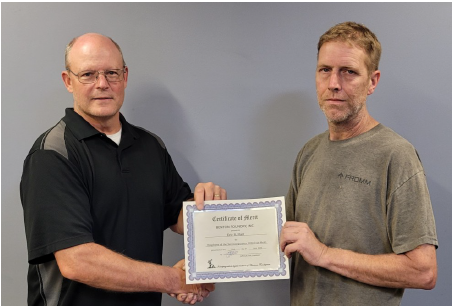
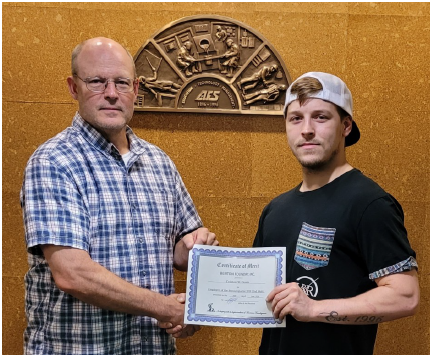
ongratulations to Eric Piatt (above), Benton Foundry’s 1st Shift Employee of the Quarter. Eric has worked at the Foundry for over 21 years. He works in the Maintenance Department. Eric lives in the Bloomsburg area with his wife, Laura and their five children. His son, Samuel, is also a Benton Foundry employee. Eric enjoys attending his kids’ sporting events and spending quality time with his family when he isn’t working.
Good Job!
C
ongratulations to Colston Gowin (below), Benton Foundry’s 2nd Shift Employee of the Quarter. Colston has been employed at the Foundry since 2025. He works in the Melt Department as an iron pourer and furnace utility man. Colston doesn’t like to be idle, he likes to keep busy. Colston lives in Dushore and he enjoys playing video games and spending quality time with his fiancé, Micayla, and his family when he isn’t working.
Good Job!
I
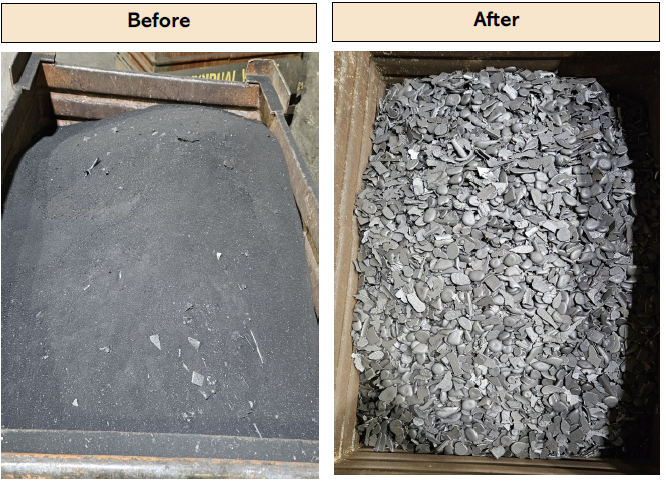
n days long past and before modern conveniences like cell phones and grocery store rotisserie chickens, the management team at Benton Foundry dared to dream a dream… “How do we put all that stuff on the floor back into the furnace?” Through many iterations of lofty management goals colliding with the mechanical mysticism of the maintenance department, along with many return trips to Frankenstein’s lab, the Rube-Goldberg amalgamation known today only as the “Dream Machine” began to take shape. Few people ever see this machine, even fewer ever run it, fewer still want to. The picture of the machine has been omitted both to protect such valuable intellectual property and out of respect for public decorum – it is after all a benevolent monster that only a mother could love. However, the service it provides behind the scenes is an undeniable boon to the foundry. The premise is simple, take mixed tramp material like you see in the “before” picture and turn it into the clean, ready-to-melt material you see in the “after” picture. The effective result is profound. Feed this machine preheater fines, shakeout scraps, trommel drum rejects, floor sweepings, and just about anything else you believe contains usable metal (typically with a chemistry identical to your product) and it churns out material ready for the furnace that is routinely cleaner than the scrap we pay to have delivered!  This machine has been running in some form or another on site for several decades now. However, in the current log being kept since mid-2020 this machine has been responsible for recovering nearly three million pounds of iron from material otherwise only fit for the landfill in exchange for a bit of electricity and ingenuity. That comes out to an average of nearly 5 tons per week from an operation similar to any mining operation, though miners wish they had this sort of return on effort! Not to mention, that is three million pounds of material that never had to be trucked or end up in a landfill. We hope you’ve enjoyed this brief glimpse behind the scenes as not all monsters are there to steal your gummy bears, some just want to help.

P
ennsylvania’s official state flower is mountain laurel. Adopted as the state flower on May 5, 1933, the mountain laurel is a native evergreen shrub. All parts of the plant are poisonous. It typically blooms in mid-to-late June, blanketing Pennsylvania’s mountainsides and woodlands with clusters of delicate, light pink and white flowers. It was chosen thanks to a petition championed by the wife of former Governor Gifford Pinchot.
~ Wikipedia
P
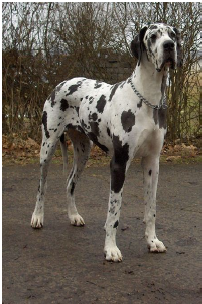
ennsylvania’s official state dog is the Great Dane. It was adopted in 1965 to recognize the breed’s historical role as a working and hunting companion for early settlers, as well as to honor the founder of the Commonwealth, William Penn, who famously owned Great Danes.
Adolfo Barrientos
Kyle Hall
Steve Lappan
Glenda Briones
Geremias Osorio
Howard Jones
Morgan Lancenese
Dustin Burke
Caden Temple
Eric Piatt
Elly Nethercott
Stefany Torrealba
Reyna Rodriguez Boyd Lore, Jr.
Nate Steinruck
Ed Evans
Isabella Kubasek
Nicholas Phares
Julia Guiso
Dave Travelpiece
Jim Lamoreaux
Cohan Nafus
Kurtis Hunsinger
Eric Malcein
Ruth Dawson
E. Ashley Luera
Brian Bedosky
Tracey Kindler
Carlos Perez
Yordi Garcia
Dave Gangle
Ana Ponce
Teresa Rodriguez
Tim Schechterly Jr.
Chris Newhart
Ed Cole
Tom Vandine
Luis Cruz
Caleb Temple
Jorge Serrano

Condolences to the family of Larry Hackenberg. Larry worked at Benton Foundry for 24+ years, retiring in 2005. At retirement, he was a Grinding Room Supervisor, a position he held for many years. Larry previously owned and operated a dairy farm with his late wife Donna and his late son Tim. His favorite hobby was buying and selling antiques. His specialty was Revolutionary War era dry sinks and old whiskey jugs. Larry passed on June 21, 2026. RIP Larry.
How many bones do sharks have?
Answer will be in 3rd Quarter 2026.
Which animal freezes solid in the winter and then thaws in the spring?
Wood Frog
| Ben Gonzalez | Highest Foxall Uptime |
| Samuel Salmeron | Highest Grinding Efficiency |
| David Straub | Highest Molding Efficiency |
| Ed Evans | Lowest Molding Scrap Rate |
| Nuria Artero | Highest Core Production Efficiency |
| Myriam Mayorga | Highest Core Assembly Efficiency |
Benton Foundry was recently recognized by the National Association of Manufacturers for being a 30-year NAM member which was highlighted in an edition of Power of Small.
Good Job to Gabe Keller, Cohan Nafus and Stephanie Selman-Guffey for completing “Overhead Crane Inspector” training through Crane Institute of America.
Awesome Job to David Buma for continuing his foundry education by completing 20 AFS e-learning courses. He was in the top 5 AFS e-learning students for June 2026.
Congratulations to Cohan Nafus on his recent wedding.
Thank you to Francisco Rocha for assisting in the core room recently.
Good Job to Stan Bohenek for completing Gating and Riser Design 101 training through AFS Mid-Atlantic Chapter.
Great Job to Brock Smith, Stanley Bohenek, Tracey Kindler, Lynn Miller, Tamara Mabus and our Pattern Shop for completing a sizeable package of new work including sampling and production.
Awesome Job to David Klinger, Paul Simko and Matthew Conley for completing Inductotherm Safety and Maintenance training.
Thank you to Cassandra Shoemaker for cleaning mullers and her willingness to help out wherever needed.
Good Job to Stan Bohenek and Mason Smith for successfully completing a training course on “Cold Box & No Bake Processes” through AFS Chemicals – Casting Academy.
Congratulations to Kyle Hall on his recent wedding.
Great Job to Jose Lopez for finishing Furnace Operator training.
Awesome Job to Teo Grigas and Andy Spencer for helping in several different roles and doing an excellent job wherever needed.
Congratulations to Scott Vandine on his recent wedding.
Good Job to Ben Hatch for completing “Enhanced Productivity: Work Smarter, Not Harder” Training.



“The Wisdom Well”
“It’s hard to beat a person who never gives up.”
~ Babe Ruth